1. Contribution as a team: We advised our client in choosing the best plastic-alternative material. Hopefully with the impact they've got, we will be heading closer to a market of plastic-free home appliances.
2. Personal contribution: I proposed and wrote the survey that adhered to brand voice. The survey had major impact on our understanding of user beliefs. I also created various contents on the website which helped us understand user behavior.

Research Goals
1. Understand user behavior and attitudes towards material change
2. Understand how users perceive sustainability and how to communicate it to them
3. Understand user preference in materials
Intended Outcome
Determine the best alternative material to plastic

PROCESS
.png)
Take a closer look
1. Interviews
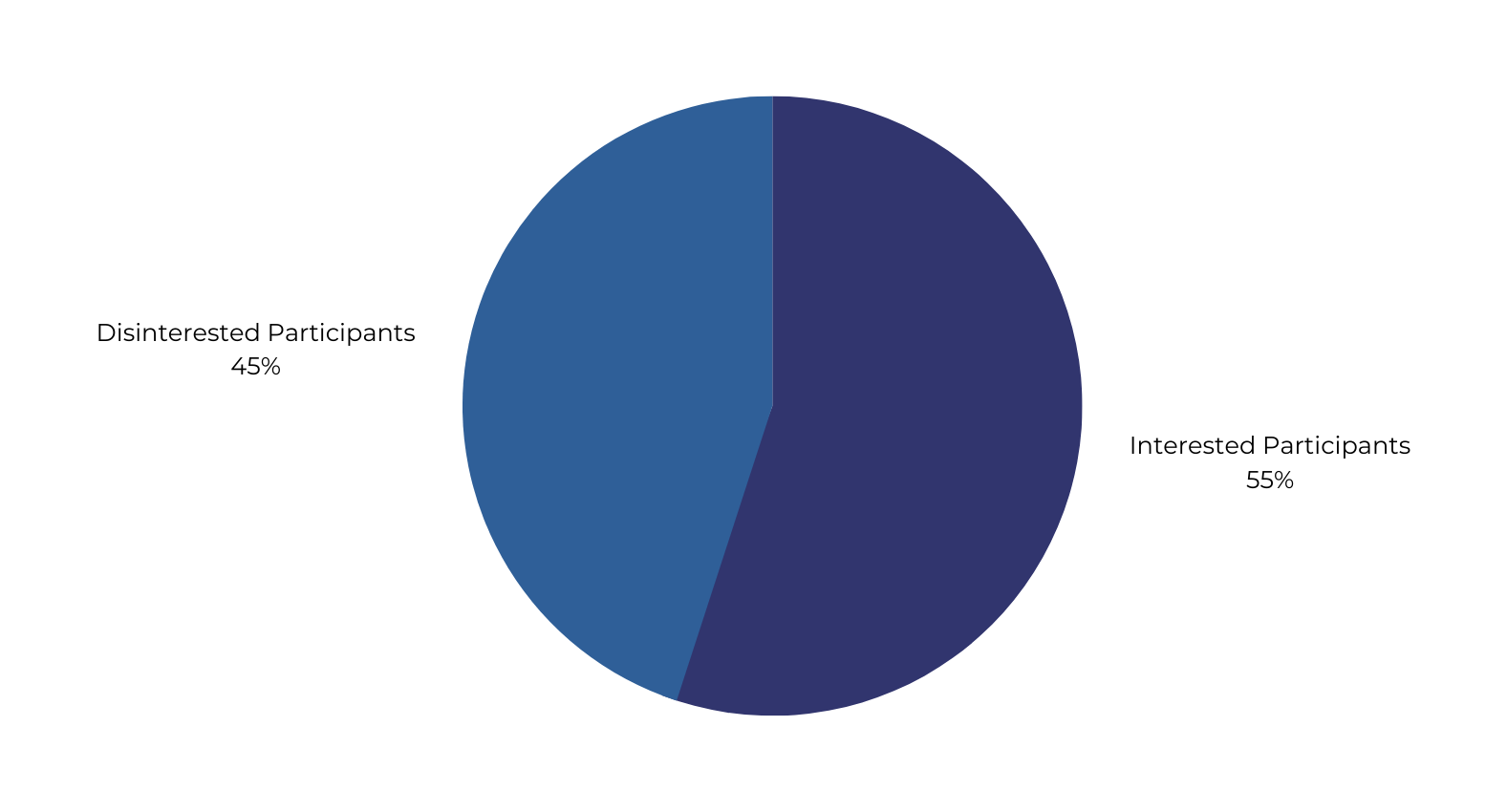
We recruited local home appliance store owners for 30-min interviews. I cold called 10 stores and got 4 “yes”. In one day, I synthesized the team’s interview results into key findings. Among our participants, 55% say that they will be interested in plastic-free refrigerators, 45% participants say that they won’t.
2. Defining research on user behavior
In my 15-page research report, I investigated business case studies in different industries, including fast fashion, food, tissues and packaging. I brought into attention the business case study of PepsiCo’s Aquafina: people enjoy drinking beverages out of an aluminum can, but don't like drinking still water out of it. This is an important lesson for us: consumers might be happy to see aluminum on the refrigerator door but dislike it for the interior. It is vital to understand how consumers associate trust with materials under different scenarios.

3. Prototype
(Lots of stories and disagreements - friendly disagreements!)
(1). A/B testing
In light of my research report, our client suggested A/B testing. We would have two refrigerators, one with aluminum interior and another plastic and have consumers pick one.
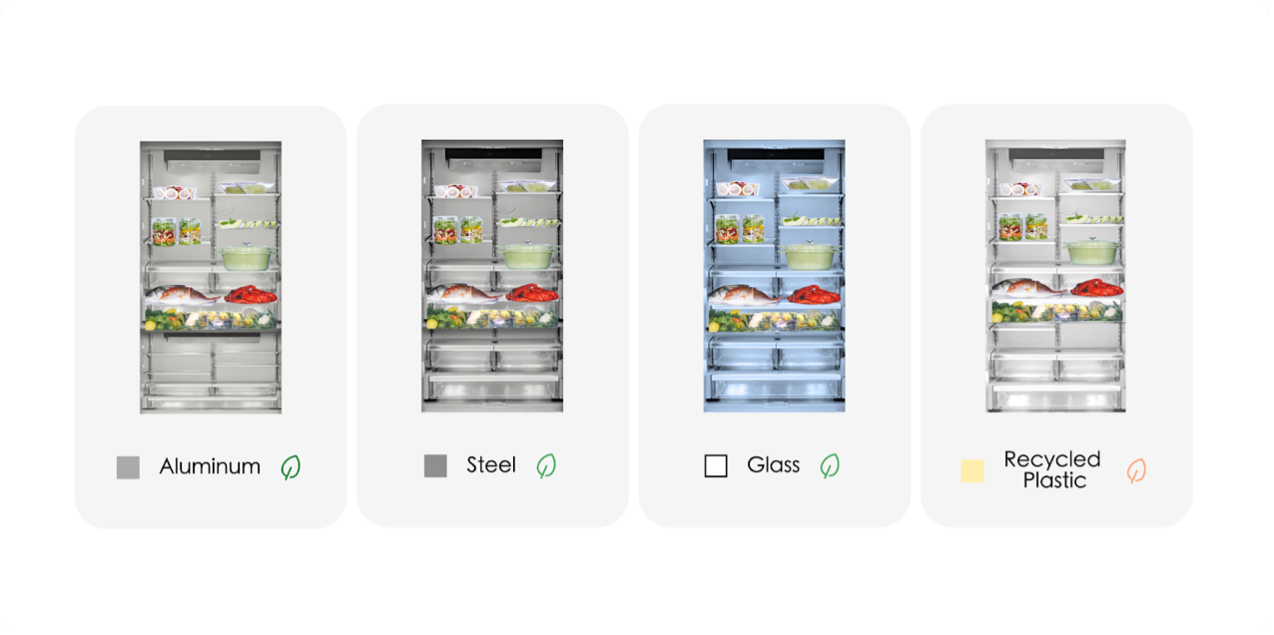
However, there were a few issues with this method: (1) We'd have more than one variable. (2) We wouldn't collect enough data that's statistically significant to do a "standard" A/B testing.
(2). Website
To measure user behavior, we built a website called “Design Your Own Refrigerator”. The idea is to have users pick their own favorite material. The website will give their DIY refrigerator a sustainability score. There will be two options: to “Edit” the refrigerator, or “Finish”directly. We want to see how many users will click “Edit”. This is to test the hypothesis that knowledge of sustainability affects user behavior. I established the user flow of the website.
.png)


(3). Survey
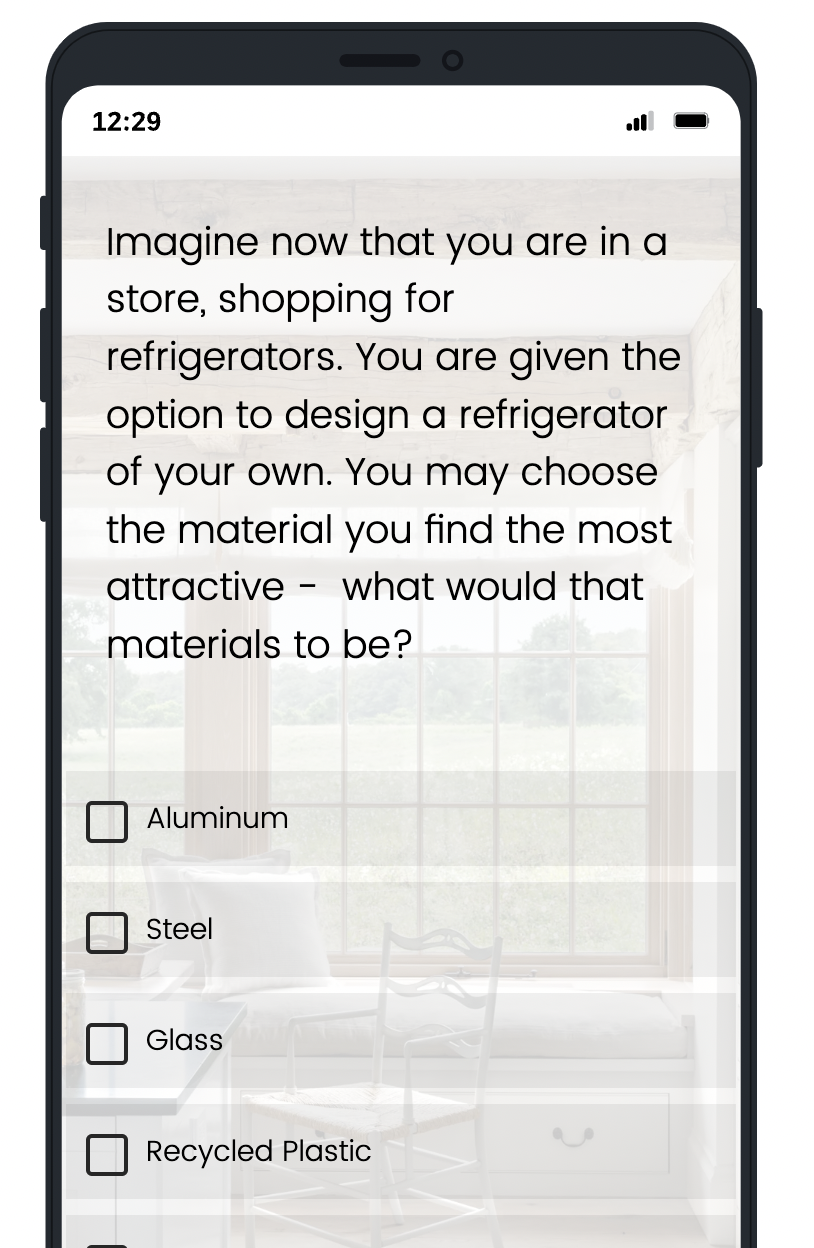
While the website is good in many ways, there is a practical constrain: it’s difficult to get significant data due to the high task time. Eventually, we updated our prototype and built a survey titled “How Sustainable is My Refrigerator?” This survey is both quantitative and qualitative. My team and I refined this survey by going through at least 6 rounds of feedback. Our goal is to gather 100 responses from home-owners in the U.S.

RESULT
(Detailed result is currently unavailable for the portfolio.) We collected 150 responses (the goal was 100).

.png)

Reflections at This Stage
Reflections
Lesson Learned
One lesson I learned deeply is to“prototype” the prototype. One simple lesson learned in a rough way. It was probably our first time working side by side with stakeholders. We were eager to share results, so we rushed into building prototype only to find out when we were almost done that it wasn’t the most ideal solution. If we sketched out all possible prototypes and communicated thoroughly with our client before starting, we would’ve had more time running the survey.
Overall Reflection
This was such a meaningful and impactful project. I felt like my skills were actually useful and my efforts made some minor contributions to the world.
This was also a very challenging program, as well as a more ambiguous research environment. As you can see in the process, our research questions keep changing (or being discovered) for each state, and the change of research questions require different approaches. But hopefully we played some part in our client's high stake projects in deplastification.
All the quotes here are not intentionally solicited but are feedback along the way
"It's always a joy to listen to Dahlia's presentation."


"The way Dahlia handle her conversations with the partner is extremely well articulated, calm and structured. We could all really see and feel that she is in control of her thoughts and work while being super open to feedback."

Lorem Ipsum is simply dummy text of the printing and typesetting industry.

Lorem Ipsum is simply dummy text of the printing and typesetting industry.